Showing posts with label The High Calling. Show all posts

Monday

Circle of Faith::back to school...


Our Back to School Circle of Faith blog theme this month was more challenging than it might have been in the past.  

I graduated from nursing school in 1972, and have only been back-to-school for continuing education courses to maintain my RN license. My husband hasn't been back-to-school since his graduation from the University of Florida (Go Gators) in 1976. I was tempted to write about my years in nursing school and working weekends in the ICU while Louis was in the Navy and at sea. Or when Louis went back to college after being discharged from the Navy, and we lived in a tiny married student apartment on campus when our 8 year old nephew came to live with us. 

I thought about writing about the 23 years of going back-to-school every fall as a family when we homeschooled our 3 youngest children through high school, By 2009, they all had graduated from homeschooling and the youngest from college this spring. I don't know how I could begin to summarize those 23 years in one post. 

I also considered writing about being a life-long learner, because honestly, isn't that the best way to live? Curious and attentive? Every day a back-to-school day. 

However, I settled on sharing a few (or more) photos of my daughter Emily's college graduation in May (because it was a great day and I never posted them here), as well as photos of the day I went back to school with her (a loose interpretation, I know) a few days before her graduation. I intended to wander about campus capturing random photos of college life while she was taking one of her final exams. I don't know what I was thinking. I'm shy about photographing random people (I'd make a terrible street photographer), but even if I'd been bolder, I'd still would have been distracted by the 800 acres of Florida's natural wetlands habitat around the FGCU (Dunk City) campus.   


(view from the parking garage looking toward the library)

These photos were taken in April, before Florida's summer wet season began. I'm confident the water levels are significantly higher today, and if I had prepared for this post earlier, I should have gone back to school and taken photos to compare.

The day before Emily's graduation (with honors, I might add), I hosted an open-house celebration for her. She asked me to not take photos. She wanted me to enjoy the moment and the many friends and family who gathered here throughout the day. 

Fortunately she did not make the same request for graduation day. 

It was a gorgeous  and cool late spring/early summer day. Our niece Sommer drove down from Winter Haven for Emily's party on Saturday and stayed overnight with us for graduation, but Mike and his family were in Gainesville for their daughter's graduation from the University of Florida the same weekend. Nick flew in from Louisiana for the day and Casey came over from West Palm, but neither one of their families were able to come with them.   

Emily in the processional waving to us in the stands...

Unfortunately, the sound system in the gym was terrible. It was nearly impossible to hear most of the speakers, so Emily's brothers, Nick and Casey, were easily distracted. When they weren't taking photos with their phones, they were acting like typical older brothers and giving Emily a hard time by constantly sending her texts.   

Emily between her friends Deborah and Ana...

Emily walking across the stage...


These photos are my contribution to The High Calling photographers' blog circle, A Circle of Faith, and the September theme Back to School. Please visit the other wonderful blogs in the circle that I've linked below -- written by some of my favorite photography friends.  

Julie at Captured Bits of Beauty

Tim at Spy Journal

Connie at Live, Love, Laugh, Hope

Marty at What Marty Sees


Circle of Faith::Where I live...


Several weeks ago, John Blase posed the question to his facebook readers: Where are you from? 

My answer was a poetic meme that could have been answered with just this one photo. I'm a native, born and raised, Floridian, also known as a Florida Cracker. Where I'm from and where I live are pretty much the same.   


As I describe in my about page, the name of my blog comes from the name of the creek that borders our property where we have lived for over twenty-five years---where we've raised and homeschooled children, washed the feet of the saints, dressed for the weddings of all three boys, and delight today in the gift of eight beautiful grandchildren. It's the only home our twenty-something daughter has ever known. 

Our five good acres on Pollywog Creek has a modest house, a pond and a creek, a dog and two cats, and my favorite backyard swing. It's not the house and property I wanted to buy when we moved here years ago. But as I look back on how God has used our humble place over the years in ways I could not have imagined twenty-five years ago, I can say with much gratitude that God has been abundantly good to us here and it's been exactly what we {I} needed and so much more.


{Fox Squirrels, Muscovy Duck, Gopher Turtle}

Over ten years ago, a grad student from the University of Central Florida took blood and tissue samples from fox squirrels on our property for research and installed nearly a dozen breeding boxes in trees throughout, but I've never seen a fox squirrel use one of them---only bees, raccoon and owl. 

{Hognose and Southern Black Racer - two of the many nonvenomous snakes in Florida}

Before I fell in love with photography, I wouldn't get within ten feet of a snake {or insect}, but there's something about a camera that makes me brave.


whereIlive1

Of all the things to photograph, the weeds I choose to call wildflowers are some of my favorites. In fact, it was a macro I accidentally captured of a common tassel flower that God used to capture my attention---to reveal the beauty in the small things I often overlooked.

"Weeds are flowers too, once you get to know them." 
Eeyore from Winnie the Pooh by A.A. Milne


All the photos in this post {my contribution to The High Calling photographers blog circle---see more information below}, including a challenge from Tim Miller to photograph from a different angle, were taken this summer on our property. I chose to take 3 photos looking up in the shade under live oaks, scrub oaks and palm trees around the circular drive on our property. I added a photo taken under the sweet gum trees in our back yard. I can't imagine living in our subtropical climate without the shade of trees.


The blog circle theme for August is Where I Live. Please visit the blogs I've linked below and come back here throughout the day or week for more links to the posts of other photographers in the circle. 


When what my employer got right was painful...


When the nursing administrator called me down to her office shortly after I'd reported for work, I couldn’t imagine her intentions.

From the time I was in first grade, I dreamed of a career in medicine. Motivated by an irrational fear of being diagnosed with childhood leukemia, I told my parents that someday I’d be a doctor and discover the cure.  

As soon as I was old enough, I volunteered as a candy striper at the local hospital. Dressed in a pinafore striped in blue rather than the traditional candy striper red, the majority of my duties didn’t involve patient care, but every now and then I'd be assigned to work on a floor near the nursing staff, and my aspirations for becoming a doctor transitioned into a desire for hands-on patient care. I began to imagine the day when I would wear a crisp white nurse's uniform and the coveted starched cap worn only by RNs in those days. 

In high school, I moved one step closer to that reality when I was offered a paid position – an opportunity to trade in my blue-striped pinafore for the white uniform of a nurse’s aide on weekends in pediatrics. I adored children, especially babies, and couldn't wait to wear a white uniform, to work more closely with the nurses I admired, and to experience hands-on care like a real nurse. It felt like a dream, and mostly it was.

Within a month I was called to the nursing administrator’s office. I was being reassigned. A ward clerk – someone to work at the desk answering the phone and doing paperwork – was needed on another floor.  

I was devastated and didn’t handle it well.  I couldn’t hold back the tears and begged her to let me stay where I was.  She was kind, but firm in her response. “You need to stop crying. Report to the head nurse on the second floor and get to work.

Looking back at that moment in the nursing administrator’s office, I’m surprised that she didn’t send me home – fire me right on the spot. Ward clerks didn’t provide patient care, but they were critical positions that required maturity that I was clearly not displaying and the ability to respond quickly.  Before computers and cell phones, ward clerks were responsible for transferring doctor’s orders into pharmacy, lab and radiology requests. And in the event of an emergency, the nurses relied heavily on the ward clerk to place the calls for help and immediately notify the doctor.  

The transfer from my position as a pediatric nurse’s aide to a ward clerk on an adult wing wasn’t a demotion – though it felt like it to me. 

Over time, I realized that my reassignment had provided an opportunity for me to grow in my understanding of how hospitals functioned. Working at the desk at the hub of patient care, I was exposed to a variety of disciplines in the medical field and grew in my understanding of how they worked together. Responsible for reading doctor’s orders and transcribing them into care plans, I learned medical terminology that became a huge advantage when I attended nursing school a few years later.  

That nursing administrator got it right, I think. Over the years she had watched me volunteering at the hospital and knew that I was a hard worker. She also was aware of my hopes of becoming a nurse and wanted me to realize that goal, so she wasn’t swayed by my immature reaction to the reassignment by either letting me get my way or by firing me.  I suspect she knew how much I would ultimately gain from the experience.

Over a decade later, after graduating from nursing school and working in a variety of nursing positions – from intensive care to that of nurse practitioner in an oncology office – I assumed a nursing administration role with the same opportunities to be kind but firm when faced with similar situations. I hope I got it just as right as she did.  


She opens her mouth with wisdom, 
and the teaching of kindness is on her tongue.
Proverbs 31:26

{This post is in response to The High Calling Share Your Story on the topic: What My Employer Gets Right}

Friday

On learning contentment and cheerful giving...


I’m ashamed to admit this.

When my husband and I were married in the fall of 1976, and I moved into his apartment near the university where he was a student, I brought an $800 credit card debt with me. According to an online calculator, $800 in 1976 would be almost $3400 today.  Among other character flaws, my credit card debt was a reflection of undisciplined spending habits.  

My husband wisely assumed responsibility for our finances. He closed that credit card account after paying it off and established a budget that kept us from spending more than we had coming in – a practice we continued after he graduated from college and our family and income grew.

Though we kept our spending under control for most of the first ten years of our marriage, we never considered including charitable giving in our budget. Neither of us was raised in homes where tithing was a priority, and we didn’t attend a church that emphasized tithing as a spiritual discipline. Our giving practices consisted of placing whatever discretionary money we might have in our wallets at the time into the offering plate as it was passed.

Eight years into our marriage, our budget and standard of living reflected our above average combined incomes, but shortly after the birth of our son Casey and buying a new home, we decided that I should resign from my position as a nursing administrator (with a salary greater than my husband’s and benefits that included a car) to stay home fulltime with our 3 boys – a decision that required drastic changes in our living and spending habits.  

A few weeks later, we were still adjusting to living on less-than-half our previous income when we were convicted about our nearly negligible giving habits. Convinced that tithing was a matter of trust and obedience, we prayerfully decided that in addition to the other changes we were making in our living standards and spending practices, we would begin tithing our gross, before taxes and deductions, income.  

Over thirty year later, it’s a decision my husband never failed to doubt or honor – even when it wasn't easy and often looked impossible, if not foolish, on paper. 


What We Learned From That Decision to Tithe

Tithing acknowledges that we are stewards, not owners, of whatever God has entrusted to our keeping (Deuteronomy 10:14). God owns it all. Tithing whatever we have been trusted to steward demonstrates that we are just conduits of giving a small portion of all that belongs to God.

Stewardship requires accountability (Matthew 25:14-30). We are accountable to God for how we use whatever He has given us. It has motivated us to live frugally, creating margins in our budget that we can not only tithe but be able to give beyond the local church to various charitable organizations and to meet the needs of others as we are led.

Because of that accountability, tithing has caused us to be more thoughtful members of the church. We have intentionally covenanted with a church we believe will use the tithes and offerings of its members for Kingdom goals to the glory of God – knowing that they, too, will be accountable.  

Tithing has been a refining discipline that has consistently brought impurities in our hearts to the surface – revealing our bent toward coveting and selfness as we learned to be content (Philippians 4:11).  

Tithing has been a matter of obedience – not because God needs our money, but because He loves us and wants us to trust in His Sovereignty and His perfect design and will for our lives – knowing that it will teach us more about His character, prove His faithfulness and increase our trust in His provisions.   

Tithing may have been birthed out of a sense of duty, but it grew to be a joy and a privilege. “Each one must give as he has decided in his heart, not reluctantly or under compulsion, for God loves a cheerful giver.” (2 Corinthians 9:7 ESV) Tithing has been a catalyst to becoming cheerful givers.
Perhaps the tithe can be a beginning way to acknowledge God as the owner of all things, but it is only a beginning and not an ending.
Do you have a tithing story you can share in comments here, or at The High Calling Share Your Story post linked below?


This post is part of The High Calling’s Share Your Story: Tithing Community Link-Up  


Saturday

Technology @ Work...


I can't believe I just did that. I groaned and covered my face in disbelief.

When my husband’s desktop computer, where most of my hi-res images were stored, began freezing up days before we were to leave for Louisiana over Christmas, I immediately began transferring photos onto disks while simultaneously working on my laptop to meet a magazine deadline.      

An hour into that multi-tasking between the desktop and laptop, I stood to answer the phone and stepped on the laptop I'd foolishly left closed on the floor. I opened it up to find dark purple lines spreading across the now broken screen.   

For months we'd been frustrated by poor cell phone service in our house. In an attempt to improve it, our carrier provided us with a signal booster that worked through wifi, but our rural internet service was unreliable. To add to the frustration, we had discontinued our land line years ago to justify purchasing cell service – a decision we now regretted. To make a phone call without our conversation breaking up or the call dropped, we had to leave the house.

Technology designed to improve communication was not working well for us, and we were locked into a family contract that would be costly to cancel early.  

In Louisiana, with family who shared that contract, we switched to a more reliable and expensive carrier, bought new phones, and negotiated with our former carrier to drop the early contract cancellation fees.

But our computer woes only worsened. When we returned home, the desktop computer had died completely while we were gone.  

My laptop was useable, but barely. Writing and editing photos with a distorted screen was a challenge I reserved for meeting important magazine deadlines, while other writing goals were put on hold until our finances following Christmas and the purchase of new cell phones would allow for new computers and the technical help I need to retrieve photos off the desktop. 

A month later, we’re making progress.  We replaced the laptop and desktop last week – this blog post is proof – but the process of recreating lost files, moving data off the damaged laptop and retrieving photos from the desktop will take time.

Our family’s recent technology woes have challenged our assumption that technology is a gift, but when it works and we make wise decisions to back-up data and avoid carelessness – technology assists our work in the world, in our home, in our relationships and in ministry.  

Some of the many benefits technology has provided our family without our ever leaving home include the opportunities to work, pay bills, manage our finances, earn college credit, conduct research before making major purchases, be better informed healthcare consumers, order prescriptions, communicate with healthcare providers, remain connected to family and friends, and shop from a variety of sources that often offer free shipping.

That challenge – as with all good things in life – is to use the benefits of technology wisely and with moderation. Online shopping can lead to impulse buying and overspending. Abusing access to friends and family can damage our relationships with false expectations and over-protection. Without disciplined work habits, including the time we make ourselves available to work and minimizing distractions, we can adopt unhealthy practices leading to either laziness to the detriment of our work or over-working that sacrifices our relationships. All of these can stunt our spiritual maturity, damage our witness, and lead us away from the abundant life in Christ for which we were created.

Of all the gifts of technology, our greatest joys can come from using it in the work of furthering the Gospel.

As each has received a gift, use it to serve one another, as good stewards of God's varied grace….in order that in everything God may be glorified through Jesus Christ. 1 Peter 4:10-11

How have you experienced technology at work in your life?


 This post is part of The HighCalling’s Technology @ Work Community Link-Up Technology @ Work Photo by Tim Miller. Design by Jennifer Dukes Lee.

Thursday

The No-Laundry-On-Sunday Sabbath...

DSC_0065

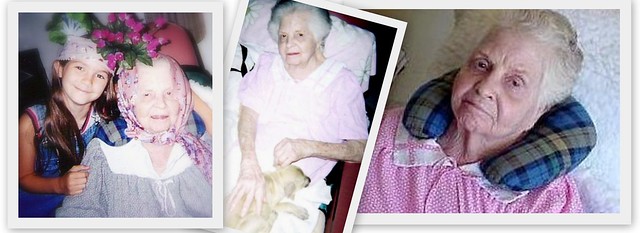
The Friday afternoon I wait for my mother’s arrival, I can only imagine how our lives are about to change.

Years-in-the-making rhythms of daily prayers, scripture reading, and study, as well as weekly Sabbath worship and rest, are like breathing, eating, and morning coffee. It wouldn’t be life without them, but their practice is as unique and changing as my circumstances. Soul anchors - with long ropes that stretch and adapt to fluctuations in my abilities and responsibilities – they are drastically altered the moment my mother is wheeled through our front door on a stretcher.

Mother grimaces as the men who drove the medical transport van slide her onto the hospital bed in the middle of what used to be our master bedroom. Disabled and with dementia, mother doesn’t say a word. She trembles, cold and afraid; and though I remind her, she’s confused about where she is and who I am. Her clothes are drenched with sweat and urine, and the drivers offer no explanation for what happened to the catheter she should have had when they picked her up at the rehab center hours earlier.

When the men leave, I fill the bathroom sink with warm water and remove her wet clothes. I give her a bath, dress her in clean clothes, and the reality that I’m on my own sinks in. Any confidence I had that I could care for my mother as well or better than those who had been caring for her for weeks slowly evaporates as I wonder what can be done - late on a Friday afternoon - about her need for a catheter and the blistering bedsores I discover on both her heels.

Two days later, my family leaves for church without me – the first of many Sundays, field trips, sports and social events I’m left behind. Mother’s complicated care is my responsibility alone. A Sabbath and any measure of leisure time I may have carved out of our family’s schedule, including homeschooling two teenage boys and their younger sister, disappear in the feeding, changing, bathing, dressing and meeting mother’s complex needs.

Beginning with feeding her breakfast, my routine with mother is the same every day. I give her a bath and dress her in clean clothes. Using a mechanical lift, I move her out of bed into a sheepskin-lined geriatric chair that I can move around the house and onto the porch. Before the morning is over, I make her bed with fresh linens. Every. Single. Day. With massages, diligent care, and good hydration and nutrition, her bedsores begin to heal. I’m not inclined to change a thing.

Desktop1

Mother’s laundry alone is more than a washer load. When added to the rest of the family’s dirty sheets and clothes, keeping the laundry under control means washing at least two loads every day and more over the weekend is added to the routine.

One Sunday, I’m aware I’ve created no room for a Sabbath rest or the grace and manna that comes from trusting God for my needs. I consider what work I can cease for a day without compromising mother’s care, and though it’s a little thing, I give into the nudge to not do laundry on Sunday.

I release my grip on control and open my hands to receive this small measure of Sabbath rest, and I’m given God’s unique-to-me redemption of time and energy. Mondays – with twice the laundry workload added to caring for mother and homeschooling – are amazingly not more difficult.

Thirteen years ago this past Easter my no-laundry-on-Sundays end when Mother leaves our home on Pollywog Creek for Heaven. Whatever Sabbath God offers me today, I receive with gratitude and the confidence that, no matter the circumstances, it will miraculously be more than enough.

{This post is in response to THC invitation here.}

Wednesday

How great the Father's love for us...

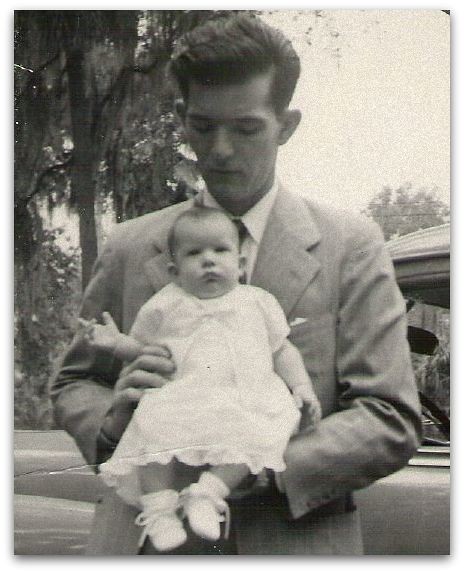
Dad and Me
My Father and Me
Easter 1950
He's a mess. His six-foot frame stretches gaunt and frail under the hospital bed's starched white sheet, his bare feet sticking out the bottom uncovered. He's badly in need of a shave and long overdue for a hair cut. The tubing that delivers oxygen through prongs in his nostrils has rubbed the skin raw where it drapes over his ears too-large for his face, and the coke-bottle lens of his glasses magnifies the fear in his eyes.

And it breaks my heart.

I'm nearly fifty when Alzheimer's plays tricks with his mind and emphysema clogs his lungs and he tells me he's afraid of the nurses - afraid they'll take his oxygen away or be mean. I help him scoot up in bed, fluff the pillows, tuck in the top sheet to cover his feet and rearrange and loosen the oxygen tubing off the raw creases behind his earlobes, but I can't convince him there's nothing to fear. 

I reach for his hand, squeeze gently, and tell him I love him, and for the first time I can remember, he says he loves me, too.  I wonder if he knows who I am. 

::

I loved my father, and I know he loved me, too - he just never knew how to show it. I was never a daddy's little princess. No bedtime stories, daddy-daughter dates, or the benefit of his counsel about boys or college. I never knew what it meant to be loved and cherished by my father - as a child or an adult.

It's no wonder the confusion of my young adult years as I bounced between the lure of feminism and the unhealthy need for a man's affection. It's only grace that drew me away and grace that protected my heart from sowing bitterness toward the father who'd neglected me when I needed him the most. But the reality is that my experience as an unloved daughter of an earthly father blocked my comprehension of what it means to be a daughter of God - the Most High King - who, as David Platt writes in Follow Me, saturates us as his children with his affection. 

In chapter 5, Platt focuses on what it means for followers of Christ to be the beloved, adopted children of God, and it is balm for the soul of this woman-child of sixty-two who still needs this assurance.
How great is the love the Father has lavished on us, that we should be called children of God! I John 3.1
Without question, our status before God was settled at the moment we turned from our sin and ourselves and trusted in Jesus as Savior and Lord. But our lives are based on the love relationship we enjoy and experience every moment of every day as God our Father saturates us as his children with his affection. p.99
I think of my cravings for affection as a young adult when Platt says that the trigger of sin {in Genesis 3} involved the man and and woman looking to the things of this world to satisfy them apart from their Creator, and when Jesus said, I am the bread of life, he was telling the crowds who had gathered to hear him, If you want to be fulfilled, put your faith in me.

I was raised in the church. I knew the Lord's prayer by heart, but the gap I experienced between a distant, unloving earthly father and "Our Father, which art in Heaven" created a craving for affection that I foolishly turned to the world to fulfill and a disconnect to God as father that left me vulnerable to the influence of feminism.

I understand why some women in the church, whose earthly fathers were unable to be the loving fathers God created them to be, struggle to see themselves as beloved daughters, resisting to call God Father and submit to his loving authority and pefect design, but the answer isn't to create a gender-neutral god, but to follow the Jesus of Scripture, to hide under the Father's protective wings, and to allow Him to lavish them with abundant love and heal their wounded hearts.
...amid all these pleasures we are wired to pursue, we must always remember that our deepest craving is not for something but for Someone. p.109
Unfortunately, as Platt states, the pleasures, pursuits, plaudits, and possessions of this world seem far more enticing...and the lives of professing Christians are oftentimes virtually indistinguishable from the lives of non-Christians.

As we begin to comprehend the love of God for His children, we discover that Jesus is the supreme source of satisfaction, and we want nothing apart from him, and as Platt reminds us, we begin to trust Christ to change our affections from the things of this world to Christ alone. It's this change in affections that increases our joy in Him from the inside out and is manifested in our increasing desire for God's Word, communion with Him in prayer, worship, and every other discipline of the faith.
This is the heart of following Jesus: enjoying God as Father through Christ the Son. And when this is a reality in life, then your reason for living is utterly revolutionized. p. 121

Previous Follow Me Discussion Posts on Pollywog Creek

Monday

We Believe Him...

DSC00371

Follow Me
A Call to Die, A Call to Live
by David Platt
Chapters 4-5

He is Lord
He is Lord
He is risen from the dead
And He is Lord

Every knee shall bow
Every tongue confess
That Jesus Christ is Lord

Platt gets in your face and ruffles your feathers, like his concluding statement in chapter 3 - that being born again "does not mean that you are making Jesus your personal Lord and Savior". I can almost hear the collective What?!?! It's a compelling lead into chapter 4, where this week's discussion begins. 

Platt explains that to say that Jesus is your personal Lord and Savior is a true expression from those who have an "intimately personal relationship with Jesus," but to say that you are making Him Lord and Savior is an idea that he believes is a reflection of "dangerous trends in contemporary Christianity." We don't make Jesus Lord. He IS Lord, and those who follow Him submit to His Lordship - on His terms, not ours. To say that we make Him Lord promotes the idea that we can make "a personal Christ we create for ourselves."

Lest we think Platt is straining gnats, I think he has point.
Slowly, subtly, we take the Jesus of the Bible and twist him into someone with whom we are a little more comfortable. We dilute what he says about the cost of following him, we disregard what he says about those who choose not to follow him, we practically ignore what he says about materialism, and we functionally miss what he says about mission. We pick and choose what we like and don't like from Jesus' teachings. In the end, we create a nice, non-offensive, politically correct, middle-class, American Jesus who looks just like us and thinks just like us.  p. 76
We've all done it, in one way or another, and I believe this trend is related to the authority {or lack of authority} God's Word holds in our lives. In chapter 3, Platt states that part of the fruit of being born again is a new creation with a new heart and a new mind. If the Bible is the final authority in our lives, it should be the source of our mind's renewal, but if we don't read and meditate on God's Word or we don't believe it is the final authority, our minds are more likely renewed by the entertainment industry, secular thought, advertisements, friends, internet content {including blogs}, twitter, facebook, and our experiences and emotions. We say we are followers of Jesus, but in reality, we are only following the Jesus who agrees with us, not the Jesus who said to his disciples, “If anyone would come after me, let him deny himself and take up his cross and follow me." {Matthew 16.24}
So we go as disciples of Jesus who love his Word and trust his truth. We go not simply as men and women who at some point decided to make Jesus our personal Lord and Savior, but ultimately as men and women who at every point are devoted to proclaiming Jesus as the universal Lord and Savior. We believe him as his disciples; therefore, we obey him and make disciples. p. 94
{To be continued with Chapter 5 Wednesday.} 


Previous Follow Me Discussion Posts on Pollywog Creek

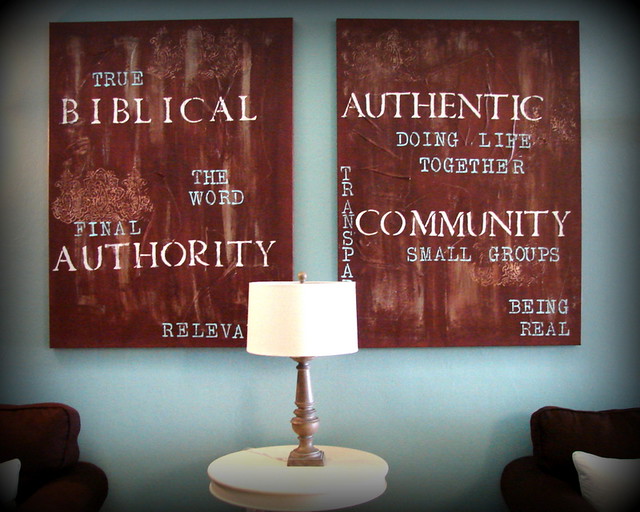
{Photo - Wall hangings, created by Sue Reed, in the lobby of Riverside Church in Ft. Myers, Florida}

Wednesday

"Captivated by His Greatness - Changed by His Grace"

DSC_0194

Follow Me by David Platt
Introduction - Chapter 3

I'd ordered it a week before and it was already in my hands when I discovered that The High Calling would be discussing Follow Me - A Call to Die, A Call to Live, by David Platt, on Monday morning through March. 

I'm not new to the teachings of David Platt or Francis Chan, whose introduction to Platt's chapters in Follow Me is deep and rich and not to be overlooked. While some may bristle at Platt's teachings, they fan a flame for me, and I'm thrilled to be wrestling through these chapters with my friends at The High Calling.

DSC_0035-001

I'm also grateful to attend a church that has embraced the mission "to make disciples who love and live like Jesus" and with core values that support that mission. These core values are re-enforced by the pastors in gospel-saturated messages and fleshed out within the church in small lifegroups where we discuss the application of those scriptures that call us to die to ourselves and to live in Christ - to be a disciple and make disciples where ever God has placed us.

From what I have read in the introduction through chapter 3, Follow Me would likely receive a hearty amen from the leaders of our church.

DSC_0093-001

As Chan states in the introduction:
The life God has for us is one of abundance. It is meant to be full, not repetitive. He wants us doing things that have eternal impact. He wants us busy expanding his Kingdom in one way or another, today and every day. This doesn't mean that every Christian should quit his or her job and move to a foreign country. But it does mean that we need to figure out how to make each day count for his purposes. p. xiii
In the first few chapters, Platt reminds us of the first disciples, as well as Christians through the ages, who eagerly, willingly, and gladly lost their lives to know, follow, and proclaim Christ, and he points us to the scriptures that call each of us to die, as well - that following Jesus involves losing your life - and finding a new life in him

Platt wants us to consider that if our lives do not reflect the fruit of following Jesus, then we are foolish to think that we are actually followers of Jesus in the first place - and more importantly, that we are likely deceived if we point to praying a prayer or inviting Jesus into our heart as proof of our salvation.  

Platt's explanation on what it means to be adopted and to be called a child of God - to be loved by God, pursued by God, and found by God - is one of the best I've read for it's completeness, clarity and simplicity.

Chapter 3 concludes with a question that we might be tempted to think is obvious, but should be considered more deeply in the light of what he has written. Have you been born again? he asks, while reminding us that the fruit of this new birth is a new heart with a new mind, new desires, a new will, a new way of relating to people around you, and a new purpose to follow Jesus. And he warns us to not be mistaken...
 This does not mean that you are making Jesus your personal Lord and Savior. p.73
And that's where Chapter 4 begins. 

Tuesday

From Pew-Warmer to Poverty-Fighter...{a book review}


"I saw a group of people who had the same dreams that I did."
Dan King, The Unlikely Missionary 

When Dan King, a self-described "guy with a regular job and a regular family who sits in the regular church pews", began blogging, he could not have envisioned where God was going to take him or how God would use him to inspire others to fulfill God's purposes for their lives.

In his recently released e-book, The Unlikely Missionary: From Pew-Warmer to Poverty-Fighter*, Dan describes his transformation from "an ordinary Christian trying not to be lukewarm" to a man of great compassion for the least of these and desire to help them succeed in overcoming poverty. He tells that story through his journey to Africa with Five Talents International, an organization that fights poverty by providing business training and spiritual development to the poor in developing third world countries.

Dan humbly states that he's not a "powerhouse writer", but his authentic and conversational style makes The Unlikely Missionary a delightful, inspiring and easy read.  Each of the nine short chapters includes interesting stories with samples from his trip journal, and concludes with questions for reflection, further study and writing prompts, making it a valuable resource for bloggers and small group or individual study.

As I read, I underlined and annotated nearly every page. His concluding paragraph in chapter six is one that spoke directly to me as I work to write and edit my photography...
"...we should never think too much of our own creative efforts. Our part is to simply highlight the creativity of the Master Creator."
Dan's book is not a "how to be a missionary" manual. It's the story of a "normal dude" who wants to be used however God chooses, and in the telling of his story, his readers are encouraged to be open to God, as well. 
"You may not end up in Africa like I did. You may end up finding more purpose right at home in your own backyard or your office or your neighborhood or your school district. The location isn't as important as doing the things that will allow God to use you to the fullest." 

About Dan King: Christ-follower. Husband. Father. Corporate training development guru. School of ministry and missions instructor. Social media editor for thehighcalling.org. Blogger at bibledude.net. Co-founder and media director for the activistfaith.org movement. Social media director for help end local poverty.


{*Dan King graciously provided a free copy for my review, but the opinions expressed here are my own. All quotes above are attributed to Dan King from The Unlikely Missionary: From Pew-Warmer to Poverty-Fighter}

{Photo} sunlight warming pews in the Belmont University bell tower chapel, 2009, and a small country church in rural south Florida, 2011